SCAT President, Don Weaver on SC Senate Bill S. 277

Don Weaver (1)

South Carolinian’s have come to expect affordable and dependable telephone service, whether through their cell phones or conventional land lines.

The Universal Service Fund was originally created to ensure just that. Businesses and residents had access to telephone communication regardless of where they lived. This meant that if a business or individual were located in a high cost or rural area, he or she would still have an equal and affordable opportunity to phone access.

When the USF was established, 20 years ago, landlines were the conventional method of communication. These consumers are now in the minority and mobile phones dominate the landline telephone market by a 4-to-1 ratio.

Today, mobile providers do not pay into the USF, but they rely upon the infrastructure USF creates to ensure access to business and other landlines. In the mobile phone world, “Wireless” is not totally wireless.

In fact, “Wireless mobile calls don’t happen in the cloud. They require a cell tower that transmits your call through landline facilities to a tower nearest the person you’re calling or directly to their landline or VoIP phone. Without land-based networks, wireless mobile phones don’t work,” said Dukes Scott, executive director of the S.C. Office of Regulatory Staff.

South Carolina Senate Bill 277 (S.277) acknowledges that all service providers, including wireless mobile, actually are dependent upon landlines to complete calls and necessitates an equitable restructuring of fees so that all users are paying into the USF.

Most businesses, from hospitals to restaurants and the 911 services, still rely on landlines as their main source of communication. Since only traditional landlines currently pay into the Universal Service Fund, businesses and elderly folks are left to carry the brunt of these costs.

“Companies big and small are paying disproportionately higher landline fees,” says Lewis Gossett, president and CEO of the S.C. Manufacturers Alliance. “Everyone who uses the fund should participate in the fund that makes service available to all South Carolinians.”

Naysayers of S.277 have claimed that this bill creates a new tax, when in fact it does not. The bill simply ensures that service providers, all of whom use the landline service, pay into the USF fund that gives them access to all phone lines. It also freezes the fund at a fourth of the actual size that the General Assembly enabled 20 years ago.

In addition, S277 guarantees that the SC Public Service Commission will not enter into regulation of the now unregulated and competitive mobile wireless market. All of these facts are sound policy reasons why policy leaders should support S277.

Lastly, and most important, as Ppresident of the S.C. Association of Taxpayers, I’ve devoted 25 years to fighting unfair and burdensome tax increases. If this were a tax increase, taxpayer groups would be working overtime to stop it.

But taxpayer groups understand and support tax fairness and equity because it is good public policy, and it ensures that all pay their fair share. While it is complex, this issue demands the serious and honest understanding of our citizens because it goes to the core of a competitive and affordable telecommunications system.

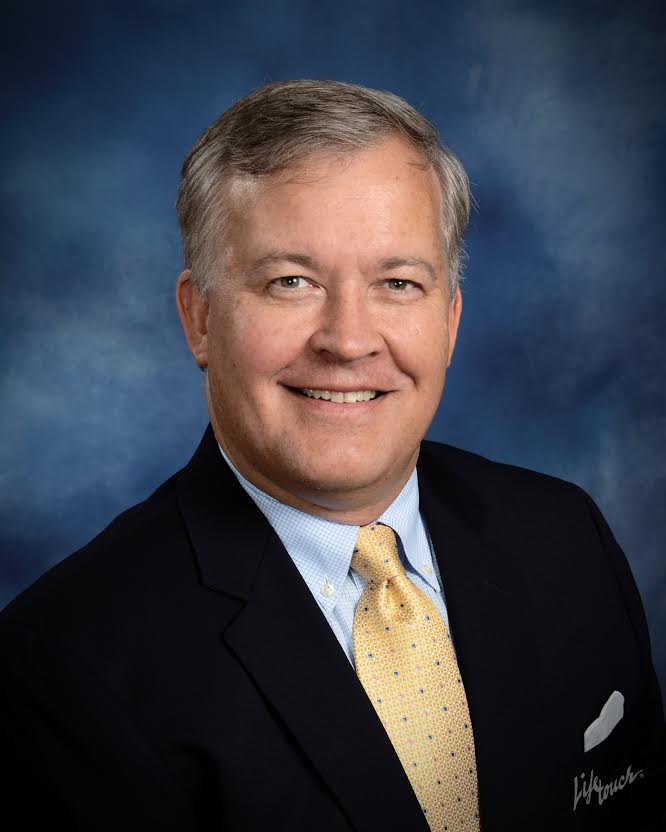
Don Weaver has been president of the S.C. Association of Taxpayers since 1996. The group is comprised of local chapters throughout the state. His email address is drw1220@aol.com


Thank you to thetandd.com for running this press release.

Rep. Horne’s Bill to Bring $1.3 Billion to SC Schools and Roads?

Simplifying how it funds schools and eliminating some sales tax exemptions could pump more than $1 billion into South Carolina’s schools and roads, a Summerville lawmaker said Wednesday.

Unveiling her plan at a news conference, Rep. Jenny Horne, R-Summerville, said the state’s formula for funding schools is overly complex and often shortchanges poor, rural school districts. Horne hopes her plan can gain support in the wake of the state Supreme Court’s recent Abbeville decision.

“The goal of the bill is to simplify funding and put the control in the hands of the school boards and school districts,” Horne said. “It’s the first filed bill that I know of addressing the Abbeville decision.”

The Supreme Court’s November Abbeville decision stems from a 1993 lawsuit when roughly half of the state’s school districts, including Berkeley County, sued the state, saying the Legislature had failed to adequately fund the state’s poor, rural school districts. The Supreme Court sided with the schools and put the onus on the Legislature to find solutions.

Gov. Nikki Haley has proposed raising the average amount spent on students, among other education proposals. House Speaker Jay Lucas has also convened a task force to study the issue and report back the Legislature next year.

Horne’s proposal, called the South Carolina Jobs, Education and Tax Act of 2015, would provide what amounts to a statewide property tax cut in most places on businesses and automobile sales by making property tax rates uniform across the state. To make up for the loss of about $600 million in tax revenues, Horne is proposing eliminating a number of sales tax exemptions that could amount to $2 billion in additional revenue for the state.

Read the full article by clicking the link below:

http://www.postandcourier.com/article/20150304/PC1603/150309727/1031/rep-jenny-horne-offers-plan-to-simplify-increase-education-funding

A Tax Credit for SC Residents facing High Homeowners Insurance Bills

Every year, I’m pleased to see that awareness of a South Carolina tax credit that helps people with high home insurance bills is increasing.

And every year around tax time, I write about the Excess Insurance Premium Tax Credit to help increase awareness, because it’s fair to assume that thousands of people who could benefit still don’t know it exists.

The credit will reduce the amount of money owed in South Carolina income tax, dollar for dollar, up to $1,250. If the cost of insuring your primary residence exceeds 5 percent of your federal adjusted gross income (from your federal tax return), then you qualify.

As tax rules go, that’s about as simple as it gets.

For people living near the coast — the land of soaring insurance bills — even those with relatively high incomes might qualify because coverage is so costly. Homeowners insurance and any additional policies for hurricanes (such as “wind pool” premiums) and flood insurance count when calculating the credit.

Read the full article by clicking the link below:

SCAT President Don Weaver Still in Support of Act 388


Don Weaver (1)

South Carolina lawmakers approved a measure in 2006 that slashed property taxes for the state’s homeowners by roughly half.

Those homeowners would see the line for school operating funds vanish from their tax bills. School districts would get that money, instead, from the state by way of a new penny sales tax.

In the eight years since implementation of the law, the penny sales tax has never generated the money needed to reimburse school districts for the lost tax revenue, according to revenue figures obtained by The Greenville News.

Not even close.

Instead, with little notice or debate, lawmakers have covered the $866 million shortfall with money principally from the General Fund that could have paid for road improvements, health care and other education needs.

Lawmakers interviewed by The News blamed what happened on a combination of factors that included the Great Recession, overly optimistic revenue projections and reliance on a revenue source that is not as stable as the one it replaced.

Don Weaver, president of the South Carolina Association of Taxpayers, said his organization has supported Act 388 because it gave relief to property owners facing rising property taxes they could not afford, especially the elderly.

“Our group thinks Act 388 is extremely important to protect especially (for) elderly homeowners who saw a tremendous rise in property taxes,” he said. “So we remain steadfast in our support of Act 388.”

Read the full article by clicking the link below:

http://www.usatoday.com/story/news/nation/2015/03/01/tax-swap-leaves-big-hole-sc-budget/24193621/

Marrying the House Roads Plan with Gov. Haley’s Roads Plan


interstate

Republican Gov. Nikki Haley has been meeting with some GOP House members — as recently as Tuesday at the Governor’s Mansion — in an effort to merge two competing road repair proposals.

Haley’s plan to fix S.C. roads and a proposal by state representatives had appeared to be on course for a head-on crash. But the two bills soon may become one vehicle, aimed at repairing and maintaining the state’s roads.

In meetings with House GOP caucus members, Haley has indicated a willingness to compromise on gas tax hikes, the size of a cut in the state’s income tax and how to restructure the state Transportation Department.

“She gets a lot of grief from time to time that it’s her way or the highway … but she has shown me a great willingness to work with the Legislature, which is something I haven’t seen in my 10 years in office (from a governor),” said state Rep. Nathan Ballentine, R-Richland, a Haley ally.

For instance, Ballentine said Haley told GOP legislators that she would accept a slightly smaller income tax cut — to 5.5 percent — than the 2 percentage point cut to 5 percent that she originally proposed.

House Majority Leader Bruce Bannister, R-Greenville, said Haley has been discussing what a roads plan should look like with many House members before a proposal is sent to the state Senate.

“She is advocating for the strongest bill that she can get out of the House,” he said.

Gov. Haley Opposes the House of Reps Borrowing Plan

Gov. Haley

Gov. Nikki Haley slammed the state’s House of Representatives on Wednesday for a borrowing proposal she said would reverse years of fiscal restraint in South Carolina.

Haley specifically called out the chairman of the House’s budget-writing committee, Rep. Brian White, R-Anderson, for sponsoring a roughly half-billion dollar bond plan she said underwent little scrutiny.

“That is basically our call to action, it’s to go and remind the Chairman of Ways and Means this is South Carolina, this is not (Washington) D.C.,” Haley said. “To go let the members of the Ways and Means Committee know that we would appreciate it if they would reverse what just happened.”

White said he was disappointed Haley took to a press conference instead of discussing her concerns with him first, adding “it’s just politics, I guess.”

White also said it was “a little disingenuous” for her to say that the budget-writing process was done in the cover of darkness.

“It’s not like this was done secretly,” White said. “I didn’t write the budget alone. I didn’t write the bond bill alone.”

Read the full article by clicking the link below:

http://www.postandcourier.com/article/20150225/PC1603/150229593/1031/gov-nikki-haley-slams-sc-house-for-borrowing-plan

SCAT President, Don Weaver Addresses Senate Bill S.277

Don Weaver (1)

South Carolinian’s have come to expect affordable and dependable telephone service, whether through their cell phones or conventional land lines. The Universal Service Fund (USF) was originally created to ensure just that.

Businesses and residents had access to telephone communication regardless of where they lived. This meant that if a business or individual were located in a high cost or rural area, they would still have an equal and affordable opportunity to phone access. When the USF was established, 20 years ago, land lines were the conventional method of communication. These consumers are now in the minority and mobile phones dominate the land line telephone market by a 4 to 1 ratio.

Today, mobile providers do not pay into the USF, but they rely upon the infrastructure USF creates to ensure access to business and other land lines. In the mobile phone world, “wireless” is not totally wireless.

In fact, “Wireless mobile calls don’t happen in the cloud. They require a cell tower that transmits your call through land line facilities to a tower nearest the person you’re calling or directly to their land line or VoIP phone. Without land-based networks, wireless mobile phones don’t work,” said Dukes Scott, executive director of the S.C. Office of Regulatory Staff.


Read the full article by clicking the link to the Greenville News Below:

http://www.greenvilleonline.com/story/opinion/contributors/2015/02/22/senate-bill-levels-playing-field-cell-phone-fee/23761659/

Less Federal Funds only Plays a Small Part in Crumbling SC Roads

The amount of money South Carolina gets from the federal government for roads has dropped since 2008, but that is only a small part of the funding problems for a crumbling highway system.

Figures compiled by The Associated Press show the total amount of money the state has received from the Federal Highway Trust Fund dropped by nearly $43 million, or more than 6 percent, during the five-year period ending in 2013, the latest year for which numbers were available.

Lawmakers trying to figure out how to get more money toward roads said that is still a significant amount — enough to maybe add an extra lane to 15 or 20 miles of interstate or repave a lot of secondary roads.

But there were bigger problems. Road funding has never matched the state’s growth with a gas tax that remained unchanged for nearly 30 years while road construction prices have risen considerably and vehicles are burning a lot less fuel.

Douglas M. Walker, Ph.D., economics Professor at the College of Charleston’s School of Business

Russian Rulette

Too often, both the proponents and opponents of legalizing casinos in South Carolina cite extreme cases in support of their positions, as is reflected in The Post and Courier’s editorial, “Don’t gamble on road needs” (Feb. 15).

As a South Carolina taxpayer, I find casinos to be an important and interesting public policy issue. But in addition, I also happen to be one of the most published and experienced experts on the economic and social impacts of casinos in the United States, and my work has been cited in the recent ongoing debate in the local editorial pages. I have worked as a consultant to regulatory agencies or testified before legislatures in Florida, Iowa, Maryland, Massachusetts, and Missouri, when they were debating casino legalization or expansion, based on my academic work in this area, which includes two books and more than fifty academic articles.

Thus, I feel compelled to comment on this issue, especially since the editorial specifically cites one of my own research papers (on casinos and corruption) in arguing against casinos in South Carolina. Casinos are a legitimate policy option for our state, and if they’re going to be debated, we should at least to consider both the costs and benefits.

Read the full article by clicking the link below:

http://www.postandcourier.com/article/20150219/PC1002/150219278/1021/don-x2019-t-deal-selective-facts-on-casino-debate