SCAT President, Don Weaver in the State Newspaper!


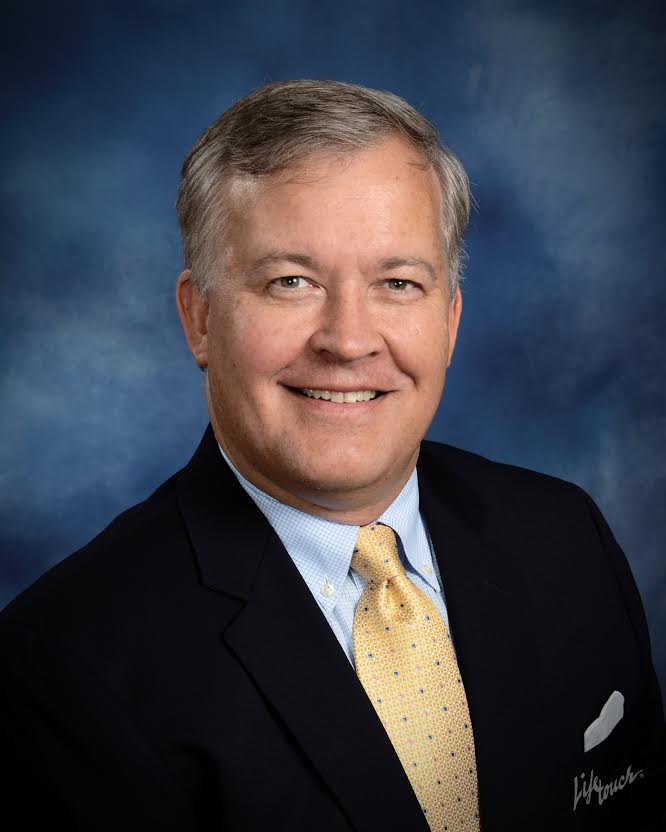
Don Weaver (1)

As you travel around South Carolina, it is becoming more and more evident that our roads need additional funding. Since the last 3-cent-per-gallon gas tax increase was signed into law by then-Gov. Carroll Campbell in 1987, the cost of paving a road has increased five-fold, while our state’s 16.75 cents fuel tax has remained the same. Clearly, something has to give.

While there are many competing fuel tax increase plans in the Legislature, our organization prefers Gov. Nikki Haley’s plan because it accomplishes two goals: It raises needed revenue for our roads by increasing the fuel tax by 10 cents per gallon over three years (raising nearly $400 million), and it lowers South Carolina’s highest-in-the-Southeast income tax to 5 percent over a period of 10 years.

By passing the Haley plan, the General Assembly will deliver a two-fold economic boost: needed money for infrastructure, which helps attract more corporate investment, and a lower income tax rate, which many retirees and corporate leaders consider when relocating. The critics who say South Carolina cannot sustain the budget cuts needed to lower the income tax rate are discounting normal revenue growth.

As South Carolina’s population has grown, along with more economic development, the state budget has grown by hundreds of millions of dollars a year in normal economic times. In a worst-case scenario where the economy suffers an unlikely slowdown, the income tax cuts could be tapered in over a longer period.
Read the full article by clicking the link below:

Governor Haley and Governor Walker Infrastructure Plans

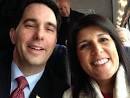
walker haley selfie

What a nice “selfie” of Nikki Haley and Scott Walker, two happy young governors riding the bus, headed to the White House and a meeting with President Obama.

Smiling radiantly all the way.

These two have much in common, like higher office ambitions — and fealty to the right-wing branding of any public agenda.

They’re not shy about labor union bashing, either.

And as soon as Gov. Haley tweeted her scrapbook keeper, many responders declared the couple a presidential campaign “Dream Ticket.”

Wonder if they took a moment to talk about major challenges they’re facing back home?

Like roads and bridges.

Wisconsin has a problem. South Carolina has a crisis.

Last October, Walker was running for reelection. He appeared before the Milwaukee Journal Sentinel editorial board and talked about supplanting all or part of Wisconsin’s 33 cents per gallon fuel tax with a special road funding sales tax. Revenues would grow long term, the governor noted, but he then promised that dedicated road system funding increases would be offset with decreases in other state taxes.

Then in January, a reelected Gov. Walker seemed to forget his October creative thinking. He eschewed any adjustments to the user-based revenue system, and instead proposed borrowing $1.1 billion for highway improvements over the next two years. Walker is busily preparing for a presidential primary — and burnishing his “no new tax” credentials.

For the full article click the link below:

http://www.postandcourier.com/article/20150405/PC1002/150409612/1021/

SC Roads Plan Coming Together

Roads bill

(W)hile the plans coming from the House and Senate finance committees aren’t perfect, each is a significant improvement on the long-awaited plan that Gov. Haley unveiled in January that could reasonably be described as an effort to cut an extraordinary amount of state taxes while raising a relatively small amount for state roads. Gov. Haley acknowledged the need to increase the gas tax to improve state roads, but she married her plan with a whopping decrease in the state’s income tax.

An agreement to support an increase in the gas tax essentially was used as leverage by the governor to try to gain a reduction in the state income tax from the top rate of 7 percent to 5 percent over 10 years. If enacted into law, the governor’s plan would blow a hole in the state budget. …

Read the full article by clicking the link below:

S.C. Rep. Hill Will Not Vote for a Gas Tax Increase

Rep. Hill
State Rep. Jonathon Hill said Monday that he does not support increasing South Carolina’s gas tax to pay for highway projects.
Speaking during a town hall meeting at the Centerville fire station, the first-term Republican from Townville said, “We don’t need to raise the gas tax.”
The GOP-controlled state House of Representatives is expected to debate a road-funding bill when members return from a two-week break next month. A plan passed by the chamber’s Ways and Means Committee would raise $400 million annually by applying the state’s 6 percent sales tax to fuel while lowering the gas tax by 6 cents per gallon. The House measure also calls for an income-tax cut of about $48 per year for most taxpayers.
Hill told about 20 residents at Monday’s meeting that he opposes the House road-funding plan for several reasons.
For starters, Hill said, officials at the South Carolina Department of Transportation “just have no accountability.”
Hill said department officials have provided varying estimates about the sum needed to deal with a backlog of road and bridge projects.
“They are playing numbers games with us,” he said. “I don’t think they are telling the truth.”
Read the full story by clicking the link below:

Leveling the Playing Field with Senate Bill 277

Some cellphone carriers are fighting a bill in the S.C. Senate that Sen. Luke Rankin argues will level the playing field between land line and cellphone companies.

Rankin, R-Conway, co-sponsored Bill 277, also known as the State Telecom Equity in Funding Act, in January along with Sens. Thomas Alexander and Brad Hutto.

Currently, only land line customers pay a fee into the S.C. Universal Service Fund, which helps land line companies offset the cost of installation and maintenance of telephone lines in rural areas of the state. The new bill would add a similar fee for cellphone customers.

Rankin, who also runs a law practice, said businesses are the primary customers for land line carriers and they’re paying a disproportionately higher fee because cellphone customers aren’t paying anything.

“When the Universal Service Fund was created almost 20 years ago, the goal was for all citizens to have access to affordable service, and all who used the network would bear the cost,” Rankin said. “Now you’ve got 4 million or so wireless customers and a million-plus landline customers, which includes me, as a business, includes churches, schools, etc., and so we are paying for the lion’s share. In fact, we’re paying it all.”

He said when legislators passed the law in 1996, they recognized there would be a day when a new technology would require the law to be updated.

“We’re at that point now,” Rankin said.

If the bill is signed into law, S.C. Universal Service Fund fees for landline customers would likely go down as fees for cellphone customers would go up, according to Rankin, who said it’s fair because cellphone customers use landline networks. He estimates customers across the board will pay a fee of about 1.1% of their bill.

The fees will go into the fund, which is administered by the Office of Regulatory Staff, and then about two dozen telephone companies will be eligible to draw from the fund to build and maintain land lines.


Read the full article by clicking the link below:

http://www.charlestonbusiness.com/news/54083-cell-service-cost-increase-creates-static?rss=0


Editorial: Fund State Roads Responsibly

interstate

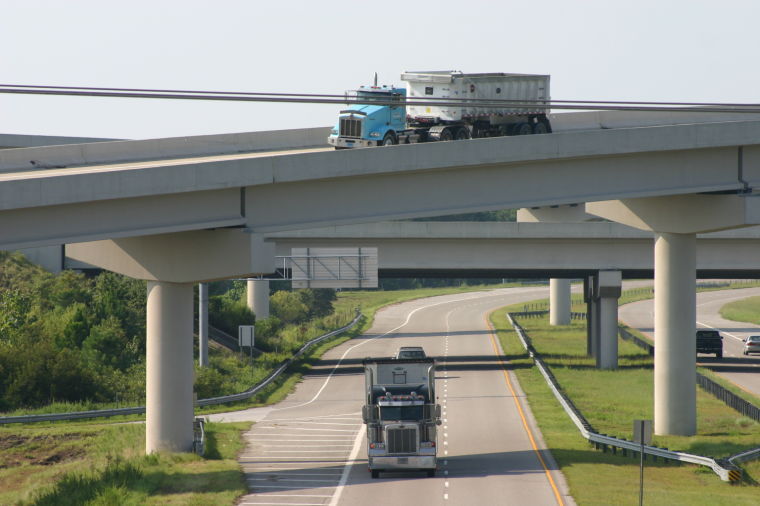
Plans are moving forward in both the South Carolina House and Senate to repair many of this state’s deplorable roads with an increase in the gas tax. AsGreenville News writer Tim Smith reported on Friday, the bills that would pump millions of dollars into road repairs apparently don’t have the blessing of Gov. Nikki Haley.

As always, there’s a lot of political maneuvering going on behind the scenes, and probably more so in the Senate where the Senate Finance Committee’s road-funding plan wasn’t set for debate. For example, as Smith reported, Senate Judiciary Committee Chairman Larry Martin argued the Senate plan had to wait on the House to deal with its plan because of a state constitutional requirement that all revenue-raising bills originate in the House. That is a small setback, if even that, and it should not be seen at this point as an effort to undermine what appears to be a healthy majority view in the Senate to fund drastically needed road improvements with new taxes.

What’s important is that while the plans coming from the House and Senate finance committees aren’t perfect, each is a significant improvement on the long-awaited plan that Gov. Haley unveiled in January that could reasonably be described as an effort to cut an extraordinary amount of state taxes while raising a relatively small amount for state roads. Gov. Haley acknowledged the need to increase the gas tax to improve state roads, but she married her plan with a whopping decrease in the state’s income tax.

An agreement to support an increase in the gas tax essentially was used as leverage by the governor to try to gain a reduction in the state income tax from the top rate of 7 percent to 5 percent over 10 years. If enacted into law, the governor’s plan would blow a hole in the state budget. It also relied on belief that such an income tax cut would stimulate such dramatically higher tax revenues that South Carolina would not suffer in just about every aspect of state government from education to social services, prisons to law enforcement. That would be asking for a whole lot of trust in a state with a proven track record of cutting taxes recklessly and then dealing with the consequences.

To read the full article click the link below:

http://www.greenvilleonline.com/story/opinion/editorials/2015/03/28/editorial-fund-state-roads-responsibly/70590474/

SC House Roads Plan Providing Middle Ground?

An S.C. House committee combined an income-tax cut proposal Thursday with a plan to raise money to fix the state’s crumbling roads, giving South Carolina three road-repair plans. The House plan could emerge as the “just right” porridge as lawmakers try to stir up a road deal.

Another plan – Gov. Nikki Haley’s tax-swap proposal – is too hot, legislators say, adding the state can’t afford the income-tax cut that the Republican governor wants. The third plan – the Senate’s – is too cold, without enough support to survive a Haley veto.

That leaves the House proposal as possibly the middle ground.

The three proposals have been offered as solutions to the $1.5 billion-a-year shortfall in the money needed to maintain, repair and expand the state’s road, bridge and mass transit system, according to the state Transportation Department. Just to pay for maintenance and preservation of the state’s existing roads and bridges would require an extra $1billion a year.

The House plan, sponsored by state Rep. Gary Simrill, R-Rock Hill, would raise roughly $427million a year.

That plan would increase the state gas tax by the equivalent of 10 cents a gallon and the state’s maximum sales tax on vehicles to $500 from $300. After Thursday’s action by the House Ways and Means Committee, the House proposal now also includes an income-tax cut that would save the average taxpayer $48 a year.

That’s far less than the tax cut that Haley has said she wants in return for supporting a roads deal. But legislators and others say Haley’s proposed tax cut would wreck the state’s general fund budget.

Read the full article by clicking the link below:

SCAT’s Official Position on S.C. Roads Funding


Haley Plan Best for SC Roads

As you travel around SC, it is becoming more and more evident that our roads need additional funding. Since the last 3 cent per gallon gas tax increase was signed into law by then Governor Carrol Campbell in 1987, the cost of paving a road has increased fivefold- while our state’s 16.75 cents fuel tax has remained the same. Clearly, something has to give.

While there are many competing fuel tax increase plans now in the Legislature, our organization prefers Governor Haley’s plan overall because it accomplishes two goals: it raises needed revenue for our roads by increasing the fuel tax by 10 cents per gallon over the course of three years (raising nearly $400 million), and it lowers S.C.’s highest in the Southeast income tax to 5 percent over a period of ten years.

By passing the Haley plan, the General Assembly will have delivered a two fold economic boost to our state: needed money for infrastructure which helps attract more corporate investment, and lowering our income tax rate, which many retirees and corporate leaders consider when relocating to a new state. To the critics of her plan who say S.C. cannot sustain the budget cuts needed to lower the income tax rate, they are discounting the normal growth in the General Revenue funds that flow to our state each year.

As South Carolina’s population has grown, along with more economic development, the state budget has grown by hundreds of millions of dollars a year in normal economic times. In a worst case scenario where the economy suffers an unlikely slow down, the income tax cuts can be tapered in over a longer time period.

While no one likes paying higher fuel taxes, myself included, the cost of deteriorating roads will be higher in the long run. When I served on the Tax Realignment Commission (TRAC) in 2010, after being appointed by the General Assembly, we studied numerous ways to raise additional road revenue: higher vehicle registration fees, higher vehicle sales taxes, etc. None compared to the revenue generated by an increase in the fuel tax. And with gas prices being down, now is a good time for the General Assembly to come together and pass the Governor’s plan. While no legislation is ever perfect, this bill comes close: more revenue for roads, and it lowers the high income tax rate S.C. is known for.

Governor Haley’s plan also meets our group’s “No New Tax Pledge” standard of not being an overall tax increase, since the gas tax increase is offset by the income tax cuts. Any other plan to raise fuel taxes without a corresponding decrease is a net tax increase, pure and simple. The General Assembly would be wise to pass Governor Haley’s plan, and let’s fix S.C. roads.

Sincerely,


Don Weaver, SCAT President

Haley Threaten to Veto House and Senate Roads Bills

Gov. Nikki Haley said Tuesday she would veto both the House and Senate proposals to repair South Carolina’s battered roads.

Undeterred, a House panel passed a proposal that would increase the state’s gas tax by the equivalent of 10 cents a gallon. It also proposes increasing the state’s current cap on its sales tax on vehicles to $500 from $300.

In letters that she sent to House and Senate leaders, Republican Haley said both the House and Senate proposals amounted to “a massive tax increase” on S.C. residents.

House Ways and Means chairman Brian White, R-Anderson, said he hoped the governor would rethink her veto threat. “I would hope that the governor would reconsider vetoing what the folks of the state are saying they want – which is their roads fixed.”

The Senate’s roads proposal, sponsored by state Sen. Ray Cleary, R-Georgetown, likely will include a 12-cent-a-gallon gas-tax hike and increasing the fees on driver’s licenses, bought every 10 years, to $50 from $25. Cleary also proposes levying a $60-a-year fee on hybrid vehicles, a $120-a-year fee on alternative-fuel vehicles and increasing the cap on the state’s sales taxes on vehicles to $600.

Senators plan to continue debating that proposal Wednesday.

Legislators say the added money is needed to raise the billions more in added revenue that the state needs to repair its roads and bridges.

Haley had proposed a tax-swap deal — increasing the gas tax by 10 cents a gallon to pay for road repairs but cutting the state’s top-end income tax rate by 2 percentage points to 5 percent.

Read the full article by clicking the link below:

Possible Veto by Gov. Haley on Roads Bill?

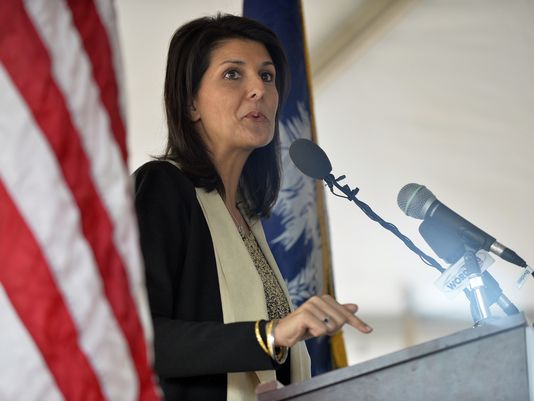
Governor Haley

Gov. Nikki Haley is signaling that she may veto a House roads package that could include a much smaller tax cut than her own plan proposes.

House leaders on Thursday scheduled twin hearings next week on a House infrastructure committee road plan and an income tax relief plan that could be paired into one plan for the House floor, if they pass their subcommittees and the full budget committee.

But the governor’s plan, which contains a much more robust income tax cut as well as a gas tax hike, is not scheduled for a hearing.

“It’s a shame that the only roads bill the Republican House budget committee is giving a hearing to is a massive tax hike that will take South Carolina in the wrong direction and that the governor has clearly stated she will veto,” Chaney Adams, a Haley spokeswoman, told The Greenville News.

House Ways and Means Chairman Brian White on Thursday filed a bill that would offer a much smaller income tax cut than the one proposed by Haley, which is key to her road-funding plan.

White has scheduled a hearing on his bill next week but has not scheduled a hearing for Haley’s plan, which is contained in a bill by Rep. Tommy Stringer of Greenville and co-signed by 44 Republicans.

Read the full article by clicking the link below:

http://www.greenvilleonline.com/story/news/politics/2015/03/21/house-committees-road-plan-face-veto-haley/25134703/