SC Lawmakers are Divided on how to Fix SC Roads

Lawmakers have yet to get behind a single plan to fix the state’s crumbling roads with just days to go before the legislative session starts.

Legislators said road repairs will be a top priority in 2015 as they addressed the media Thursday, previewing the session.

But an increase to the state’s 16.75 cent-a-gallon gas tax appears to be off the table.

With S.C. gas prices averaging $2.01 Thursday, paying a higher gas tax would not be as great a burden for drivers as a year ago, when gas cost $1.10 a gallon more. But lawmakers are averse to raising the gas tax, in part because Gov. Nikki Haley, R-Lexington, has said she would veto a gas-tax hike.

Lawmakers are divided on how to raise the nearly $43 billion in added money needed for road repairs and expansion through 2040.

That means it may take more than one legislative session to come up with a roads fix, new House Speaker Jay Lucas, R-Darlington, has suggested.

In the S.C. House, a special panel has been studying roads for months.

SC Lawmakers: All Options on the Table to Fix SC Roads


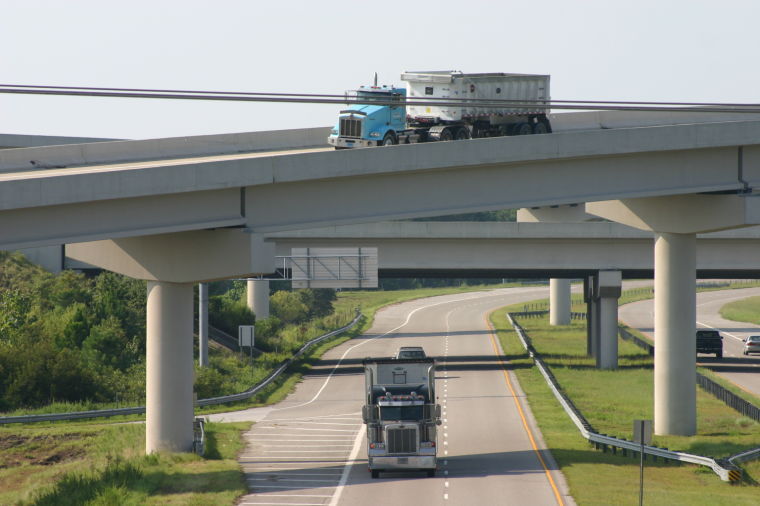
interstate

Some S.C. lawmakers are entertaining the idea of a statewide sales tax to further fund state roads.

But other members of the General Assembly say all options are on the table, from increasing the state’s gas tax to transferring state secondary roads to local government control.

At a legislative briefing with the media Thursday, Rep. Gary Simrill proposed a one-cent sales tax hike, which he said would generate $643 million a year.

Simrill said the tax, which is presently in the discussion stages only, could appear as a state referendum question as early as 2016.

He also hopes to lower the state gas tax by six to eight cents while removing the exemption on wholesale fuel.

Both measures, he said, would be permanent. “The reliance of fuel tax only to pay for roads is a diminishing return,” Simrill said. “We are flat lining in terms of our ability to collect on fuel taxes.”

Read the full story by clicking the link below.

http://www.myhorrynews.com/news/business/article_464aea94-9754-11e4-976c-53aaaff0ddee.html

S.C. Senator Nikki Setzler’s Road Work Plan

If a South Carolina state lawmaker gets his way, hundreds of millions of dollars of funds would be made available to add interstate lanes around the state.

Sen. Nikki Setzler, D-West Columbia, has filed a bill for consideration during the upcoming regular session that would create the Interstate Lane Expansion Fund in the State Infrastructure Bank. Specifically, the bill would use about $60 million annually from vehicle sales taxes to finance constructing new lanes on existing interstates.

Funds could not be used to construct new interstates.

Until 2013, the tax money from vehicle sales was routed entirely to the state’s general fund. Since then, half of the money is used for major work and also for secondary road projects, which aren’t eligible for federal money. Setzler’s plan is to claim the remaining half for lane expansion.

Setzler is one of many state lawmakers who are expected to pursue additional transportation revenue during the five-month session that begins Jan. 13. The lawmakers are acting after the South Carolina Transportation Commission released a projection that the state will need to spend $60 billion during the next 25 years for road work.


– Read the full article by clicking the link below:

http://www.landlinemag.com/Story.aspx?StoryID=28284#.VK6nZCvF9qg

Anderson County Representatives Agree Roads are Key!!

Anderson County’s three longest-tenured legislators agreed Friday that finding money to fix the state’s roads and bridges will be the top task facing the South Carolina General Assembly this year. “The No. 1 issue that is facing us is roads,” said Rep. Brian White, who is chairman of the state House of Representatives Ways and Means Committee. The Republican from Anderson is starting his eighth term.

A report issued by the South Carolina Department of Transportation last year estimated that the state needs to come up with nearly $43 billion in additional money during the next 25 years for maintaining and expanding highways and other transit needs. “We all know it is bad,” White said during the Anderson Area Chamber of Commerce’s monthly Toast N’ Topics breakfast at Tucker’s Restaurant on Clemson Boulevard in Anderson. “It’s an expensive endeavor.”

Raising South Carolina’s 16-cent per gallon gas tax, which is among the nation’s lowest, is one of the road-funding options that will likely be considered when state lawmakers return to the Columbia later this month, White said. But, he cautioned, such a move represents only a partial solution. “Just increasing the gas tax is not going to fix the roads,” White said.

Read the full article here: http://www.thestate.com/2015/01/02/3904866/roads-top-priority-legislators.html#storylink=cpy

SC Legislature “A Year of Problem Solving?”


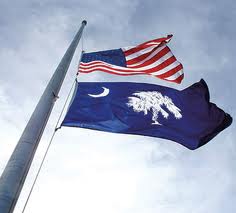
state flag

Repair crumbling roads

The state Transportation Department estimates it will cost South Carolina $43 billion that the state does not have to repair and expand the state’s roads system through 2040.

While running for re-election, Republican Gov. Nikki Haley promised to unveil her road-repair plan this month. Haley, who opposes increasing the state’s third-lowest-in-the-nation gas tax, will have several high-profile chances to say what she thinks should be done, starting at her Jan. 14 inauguration and, later in the month, in her State of the State speech.

Facing criticism from constituents, legislators also have been studying the issue and meet again Jan. 12 to try to finalize a proposal.

The most recent proposal would give counties the responsibility to repair and maintain nearly half of the roads currently maintained by the state in return for guaranteed state assistance.

County representatives oppose that idea, wary the Legislature will provide enough assistance.

Fix rural schools

After more than two decades of court battles, the state Supreme Court ruled in November that the state has failed in its duty to provide a “minimally adequate” education to children in the state’s poorest school districts.

The court did not order a specific remedy. Instead, it told lawmakers and the school districts to report back with a plan to address a number of issues, including the state’s unconstitutional way of paying for schools, aging facilities and the difficulty in attracting talented teachers to rural areas.

However, Gov. Haley and state lawmakers filed motions with the Supreme Court earlier this week asking for a rehearing of the education lawsuit.

That request could delay what is expected to be a protracted negotiation between lawmakers and poor schools.

Fix Social Services

The embattled state Department of Social Services has been under scrutiny for more than a year with critics saying the agency does not do enough to prevent child deaths. Former director Lillian Koller resigned in July. Last month, Haley named a new agency leader, Clemson official Susan Alford.

Alford must win confirmation from the state Senate.

Meanwhile, Social Services is trying to hire new caseworkers to reduce the number of children its child-welfare workers must oversee. But efforts to increase the number of child-welfare workers have been hurt by high turnover within the agency, as other workers quit.

S.C. Association of Counties to Oppose Road Transfer Legislation

The S.C. Association of Counties completed its Legislative Policy Development process for the 2015 session in December. A complete publication containing the group’s policy positions is being prepared. In a Dec. 17 memo to the Governor, and sent to media outlets, the SCAC Board of Directors said they will likely oppose any legislation that calls for the transferring of roads to local governments and will seek to get the legislature to fully fund the local government fund.

In regards to state infrastructure needs, the SCAC board said that for 50 years the General Assembly adopted a system that included the intake of secondary roads into the state highway system. It is estimated, the memo said, that the percentage of secondary roads in good condition is 10 percent. Counties do not have the financial resources to fund the necessary maintenance costs on the roads within the state system.

Recently passed legislation limiting local governments’ abilities to raise revenues and a failure of the state to provide cost shared revenues have strangled the financial ability for counties to provide minimal services for their constituents. Adding the secondary highway system as a burden on county government and county taxpayers will ensure the financial collapse of many local governments.

Many counties, especially rural counties, have neither the residential nor commercial tax base to assume the perpetual maintenance cost of roads, even if given new revenue sources. Absent a constitutional amendment, no revenue source is safe from the whimsy of a future General Assembly.

For the full story click the link below:

http://www.scnow.com/observer/article_8b5e6a4e-913b-11e4-8426-73bde2000cad.html

Association of Counties addresses General Assembly

The board of directors of the South Carolina Association of Counties (SCAC) sent the following communication in regard to state infrastructure needs and the Local Government Fund to Governor Nikki Haley and members of the South Carolina General Assembly:

The South Carolina Association of Counties completed its legislative policy development process for the 2015 legislative session on Dec. 5. Although a complete publication containing our policy positions is forthcoming, it is imperative SCAC address two issues prior to the convening of the 121st General Assembly. The significance of state infrastructure needs and the Local Government Fund to the people of South Carolina cannot be overstated, and we believe must be resolved in a way that benefits our citizenry, and not in a manner that merely represents delay or expediency.


Read the full article by clicking the link below:

http://www.moultrienews.com/article/20141230/MN01/141239977/1014/association-of-counties-addresses-general-assembly

Best Neglected Issue by SC Legislatures (The State Newspaper)


Winner: Crumbling roads

South Carolina’s interstate system is more than 50 years old.

South Carolina’s 16.75 cent-a-gallon gas tax – much lower than Georgia and North Carolina’s – has not increased in 27 years.

While finding some new money for roads every now and then, the state has failed to come up with a long-term solution to its crumbling roads, filled with cracks and pot holes.

South Carolina has the 4th largest state-maintained highway system in the country with less than 30 percent of traffic riding on good pavement.

Bills to increase the gas tax or other taxes to pay for roads failed this year, and Gov. Nikki Haley, R-Lexington, has said she will veto any tax increase.

Speaker Jay Lucas, R-Darlington, formed a special panel chaired by state Rep. Gary Simrill, R-York, to reform the Transportation Department and find a solution to the $43 billion (that’s “billion” with a “b”) deficit the Transportation Department says it has through 2040 to repair and expand the roads.

Simrill has suggested giving some roads and money to maintain them to counties. But county officials oppose that idea, noting the Legislature has not fulfilled other promises to local governments in recent years.

Senators also have pre-filed legislation to deal with the roads.

York County to Crack Down on Unoccupied Homes for Property Tax Purposes

Starting next year, York County officials will be on the hunt for homeowners who aren’t at home. The county assessor’s office will take bids next month for a countywide audit of its property tax receipts to identify any homes receiving the owner-occupied discount when in fact the owner does not live in the house. Second homes or rental properties have to pay a heftier tax bill than homes where the owner is living full time.

Assessor Teresa Simmons said an auditing firm will be able to cross-check homeowners’ listed primary residence against voter registration, real estate records, and car tax and driver’s license information, whether inside or outside of South Carolina, to find out where a taxpayer is really staying.

Several counties have done similar legal residence audits in recent years. The issue of unoccupied homes most often comes up in coastal areas with a lot of vacation property or counties with military installations where service members may be deployed for long periods of time. But anywhere a property owner keeps a second home, state law requires him or her to pay a higher tax rate, as much as three times what an owner-occupier would pay.

In Rock Hill, for example, a homeowner living in a $250,000 home would owe $2,100 in local property taxes. The tax bill increases to $5,725 if the owner is not using the house as a primary residence.

If the audit uncovers a home claiming the exemption is not owner-occupied, depending on how long the homeowner has claimed the exception, York County could revise owner’s bill and claim back taxes for up to three years prior to the home being ruled ineligible for the exemption.

Some of those claiming the exemption may have made an honest mistake or there’s some error in the tax records, Simmons said. If the assessor’s office wasn’t notified of a death, for example, the office might collect a lower tax on the home of a deceased person unless the deed is changed in probate court.

Others are more deliberate in claiming a tax exemption on two different houses, especially if they own a home out of state. A homeowner may claim an exemption on a home in South Carolina, Simmons said, but auditors find their vehicle is registered in another state with a lower or no car tax.

“You may have a home here in York County under your name, and a home in your wife’s name somewhere else,” the assessor said. “So these auditing firms have ways of searching for people you’re associated with.”

For now, the York County assessor’s office mostly relies on neighbors or homeowners associations to report suspected abuses. But in nine other South Carolina counties that have performed similar residency audits, Simmons estimates local governments have reaped between $355,000 and $3.1 million in additional revenue.

Any extra revenue generated by the audit will likely benefit York County’s four school districts, which are prohibited by South Carolina’s Act 388 from taxing owner-occupied homes for school operations costs, but can tax rental and vacation properties.